
All about cradle covers
A cradle cover is the latest version of the venerable stack pack. It is a cover that literally cradles the sail when the sail is lowered.
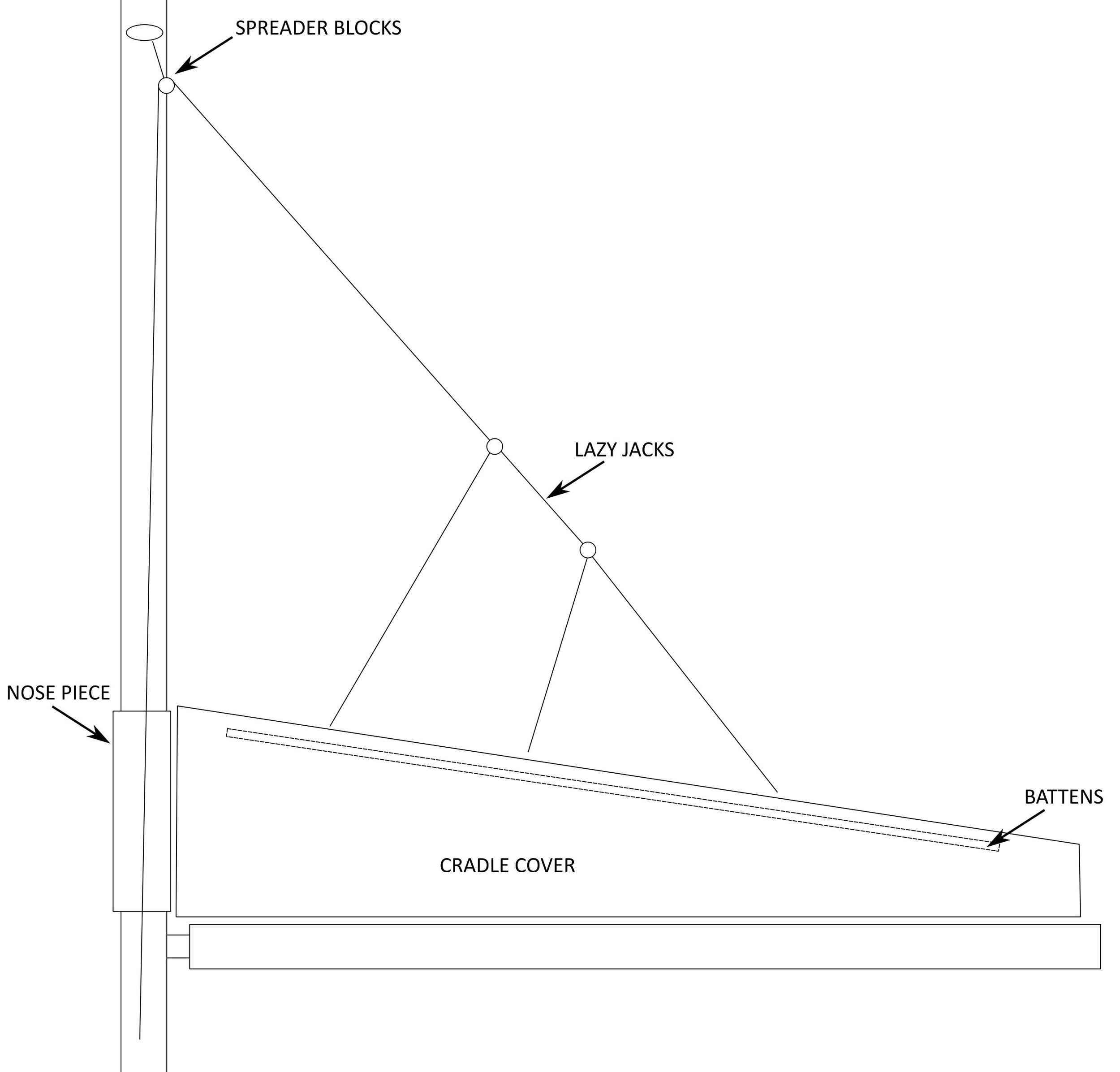
A cradle cover consists of five parts: the cover itself, the nose piece, the battens, the lazy jacks and the spreader blocks. All of this is provided when we build one..
The cover is the main part of the assembly and it slides into the track on the top of the boom. We usually fit the cover with a bolt rope for this purpose but we can also use sail slides. If the boom has an external track then we will use the appropriate slides. The cover has a large zip along the top edge which closes it when the sail is down. We leave gaps in the lower edge for the reef lines to exit and tie around the boom. At the front of the cover are two more zips to attach the nose piece.
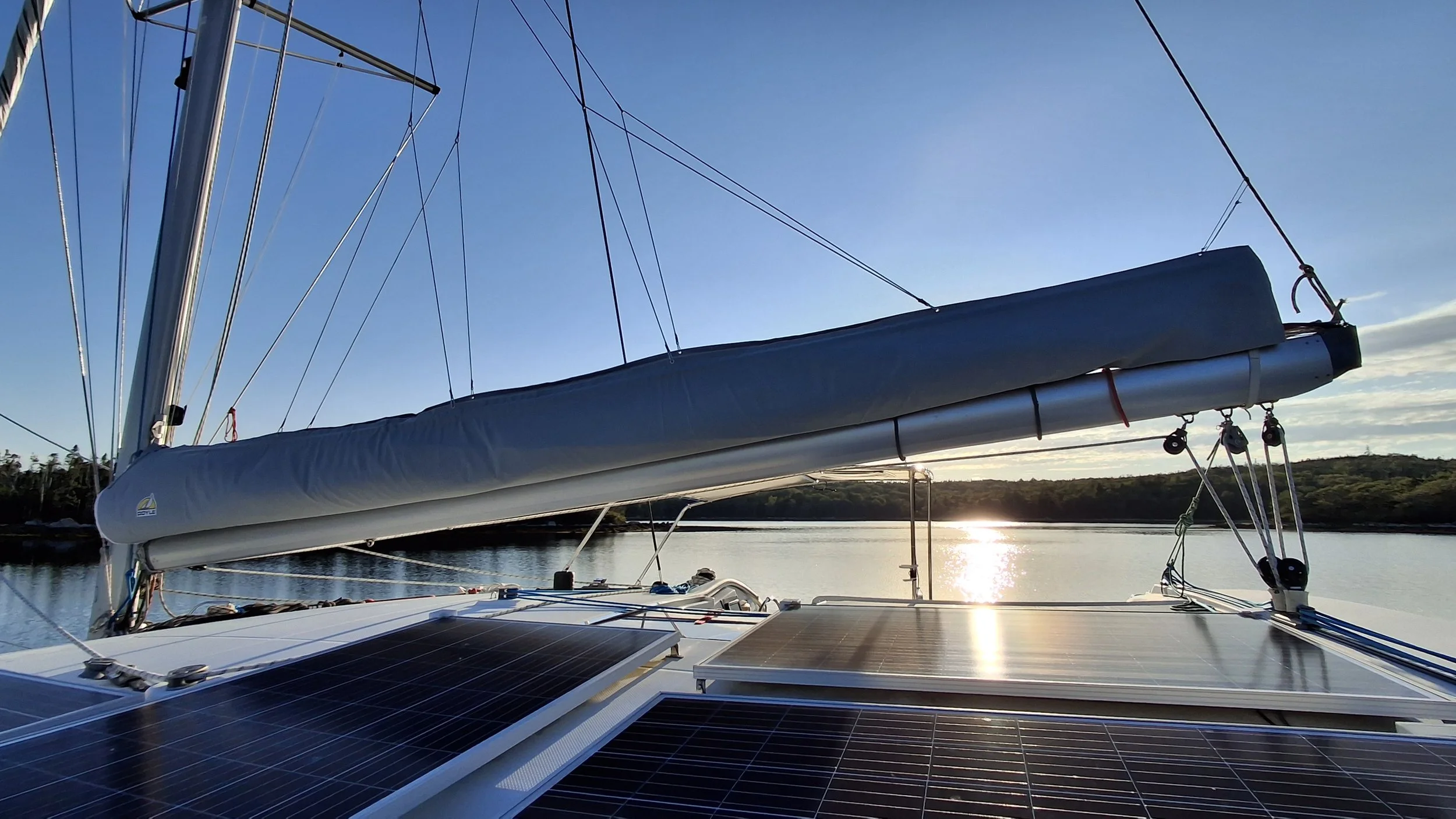
A cradle cover holding the sail when lowered
The nose piece is a separate item that attaches to the front of the cover and wraps around the mast. This prevents the wind from getting in at the front ad trying to blow the cover open. It also protects the luff of the mainsail from the sun. The nose piece is removed before the sail is raised and re-attached when the sail is put away.
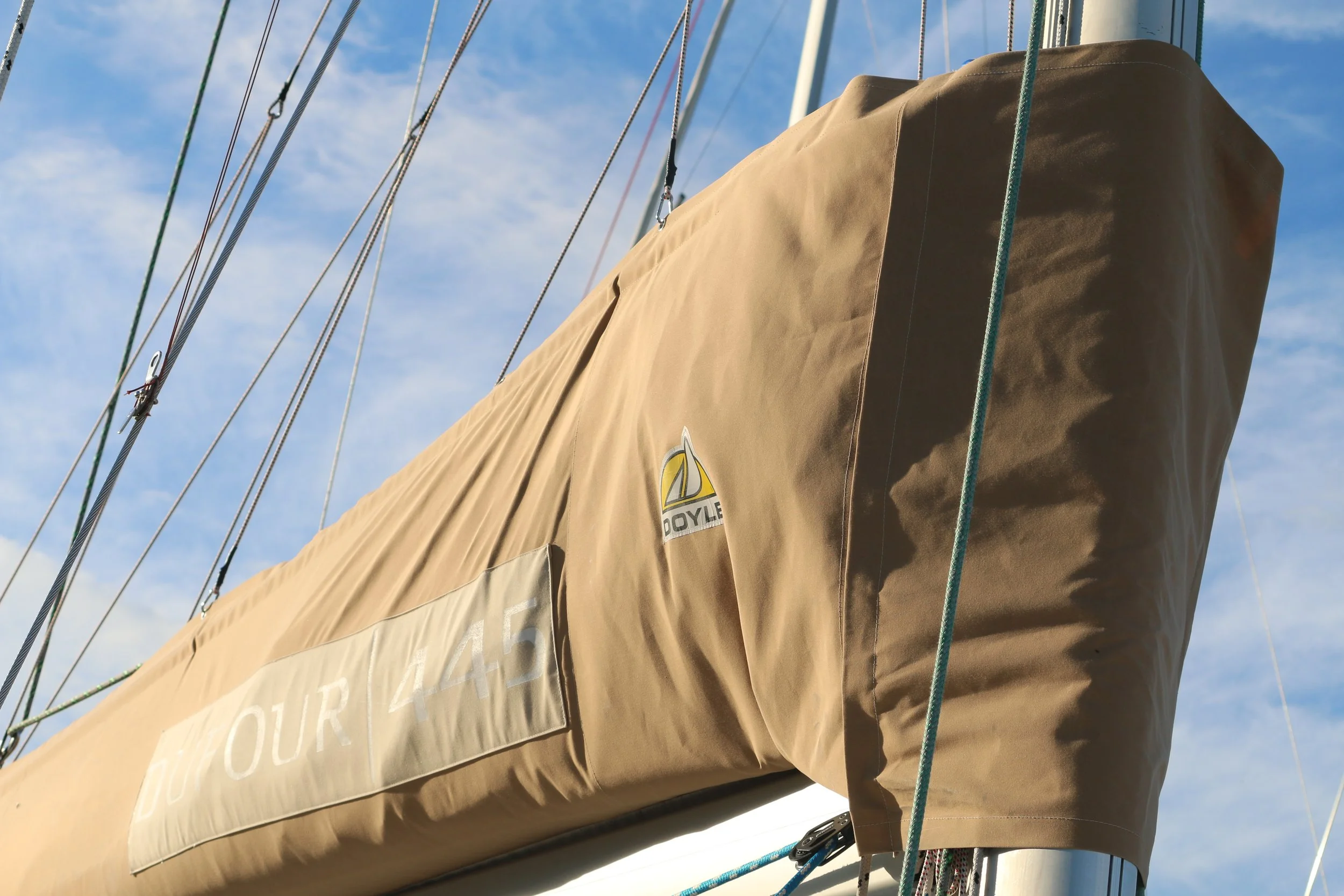
The nose piece zipped in place
The battens are lengths of conduit that fit into sleeves in the top of the cover. The add rigidity to the cover that helps it maintain its shape, keeps the lazy jacks in the right place and makes for easier sail handling. The battens are flexible enough to cope with the wear and tear of life on a boat without breaking while still doing their job.
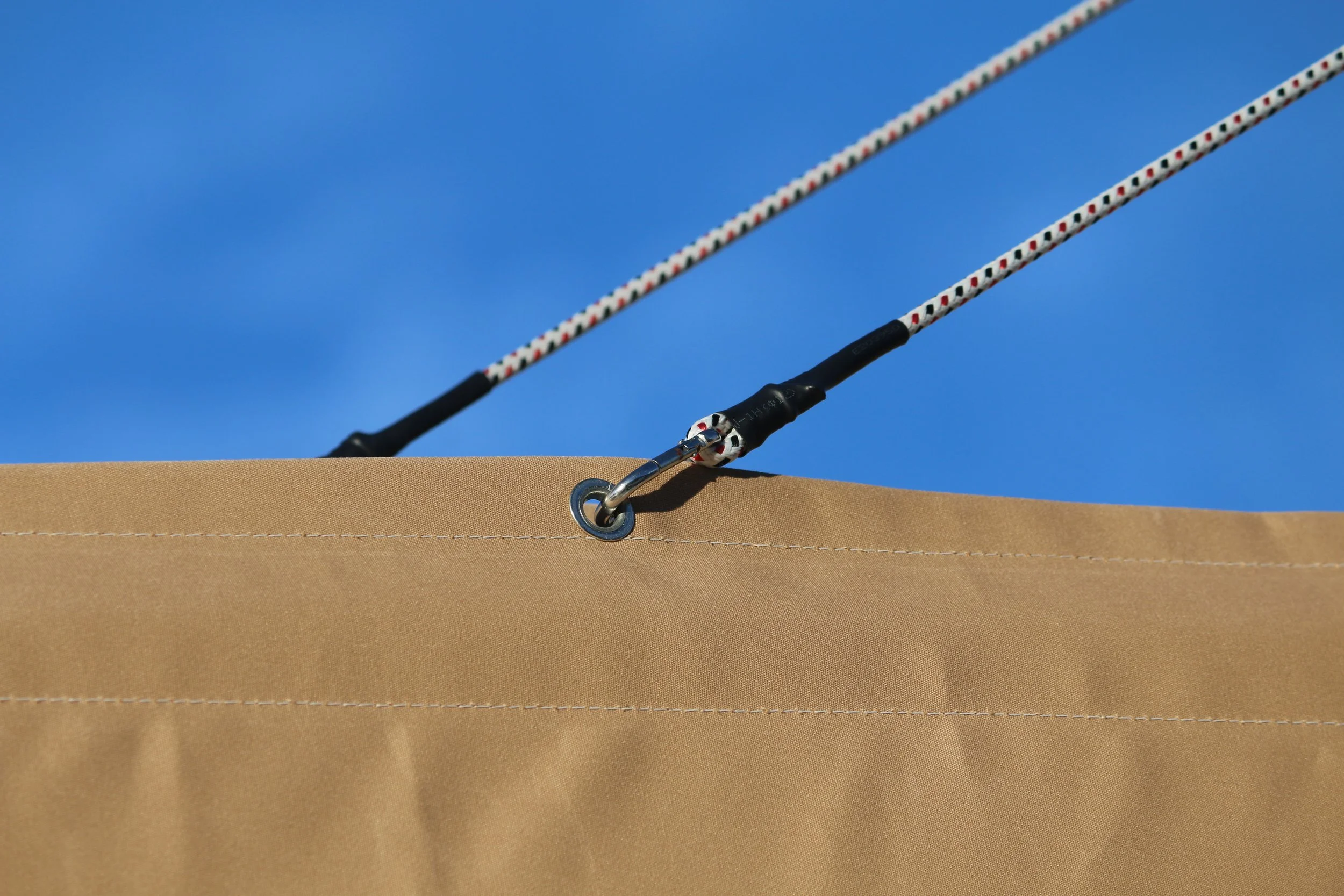
The lazy jacks clip onto the cover right above the batten pocket
The lazy jacks, with either three or for legs, attach to the top of the cover with clips. They run from the base of the mast, up to the blocks on the spreaders and then down to the cover. They can be adjusted from the mast and the clips allow them to be easily disconnected from the cover. The lazy jacks catch the sail as it is lowered and help guide it into the cover. Dropping the mainsail is very simple and, even if you take no time to tidy it up, it is contained and out of the way of the helm.
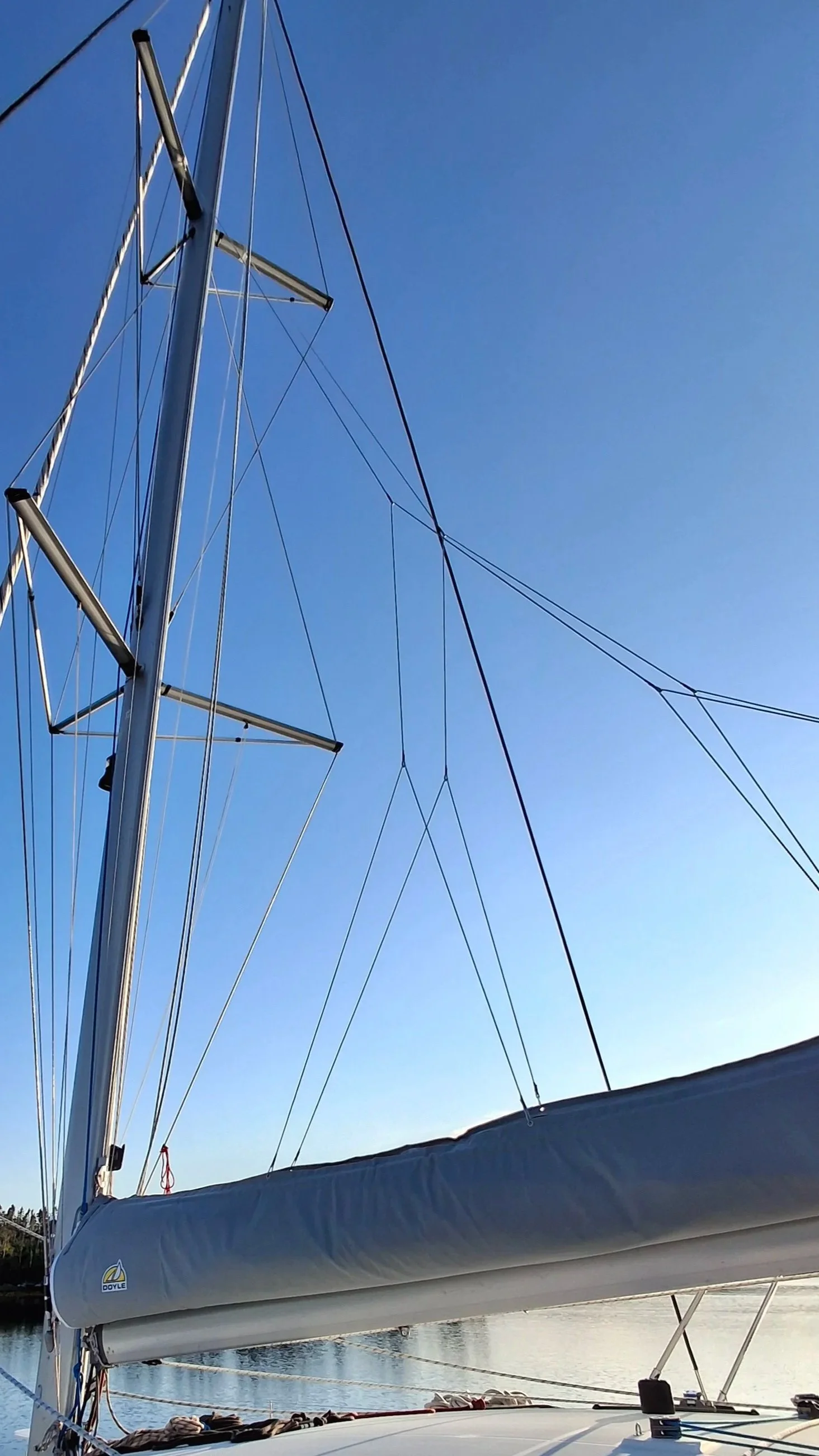
A 4-leg lazy jack system
The spreader blocks are, as the name suggests, attached to the spreaders. They are simply looped around the spreaders like a luggage tag so there's no drilling or installing hardware. Putting them on the spreaders means they can be set further apart than if they were on the mast. The wider apart they are, the easier it is to raise the mainsail between them. Using the spreaders also keeps the blocks lower so that the leech gets free of the lazy jacks sooner. This all makes it much easier to hoist the sail with less requirement for keeping the boat dead into the wind.
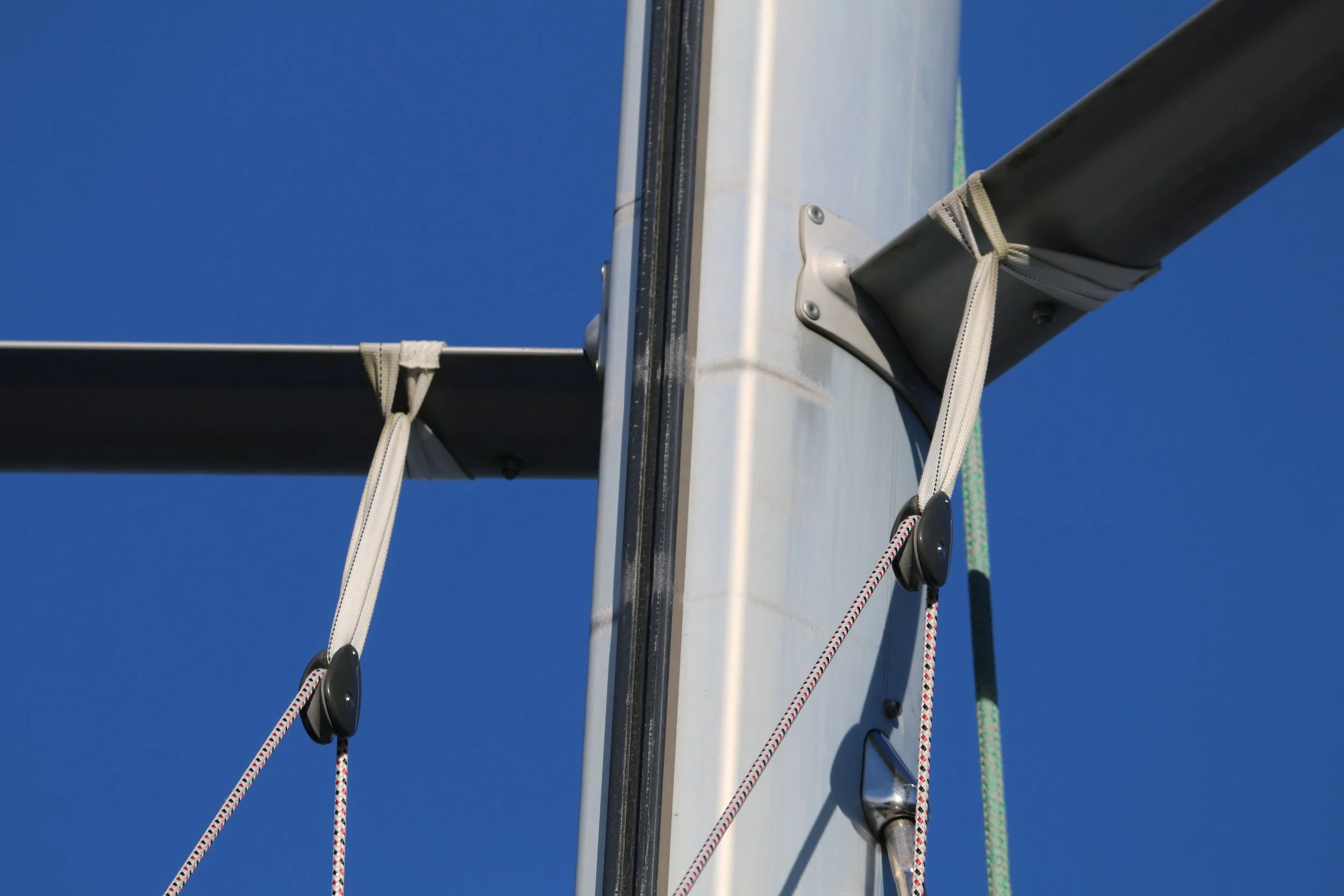
Spreader blocks hanging from their straps around the spreaders
To use a cradle cover, just remove the nose piece, unzip the cover and hoist the sail. The sail will quickly come clear of the lazy jacks and off you go. When the time comes to drop the mainsail, just lower away. The sail will be guided into the cover by the lazy jacks, a few tugs on the leech will straighten it out and then zip up the cover. Replace the nose piece and you're done. If you need to put a reef in then the cover will hold the excess sail in the same manner, keeping it under control and off the deck while you sail.
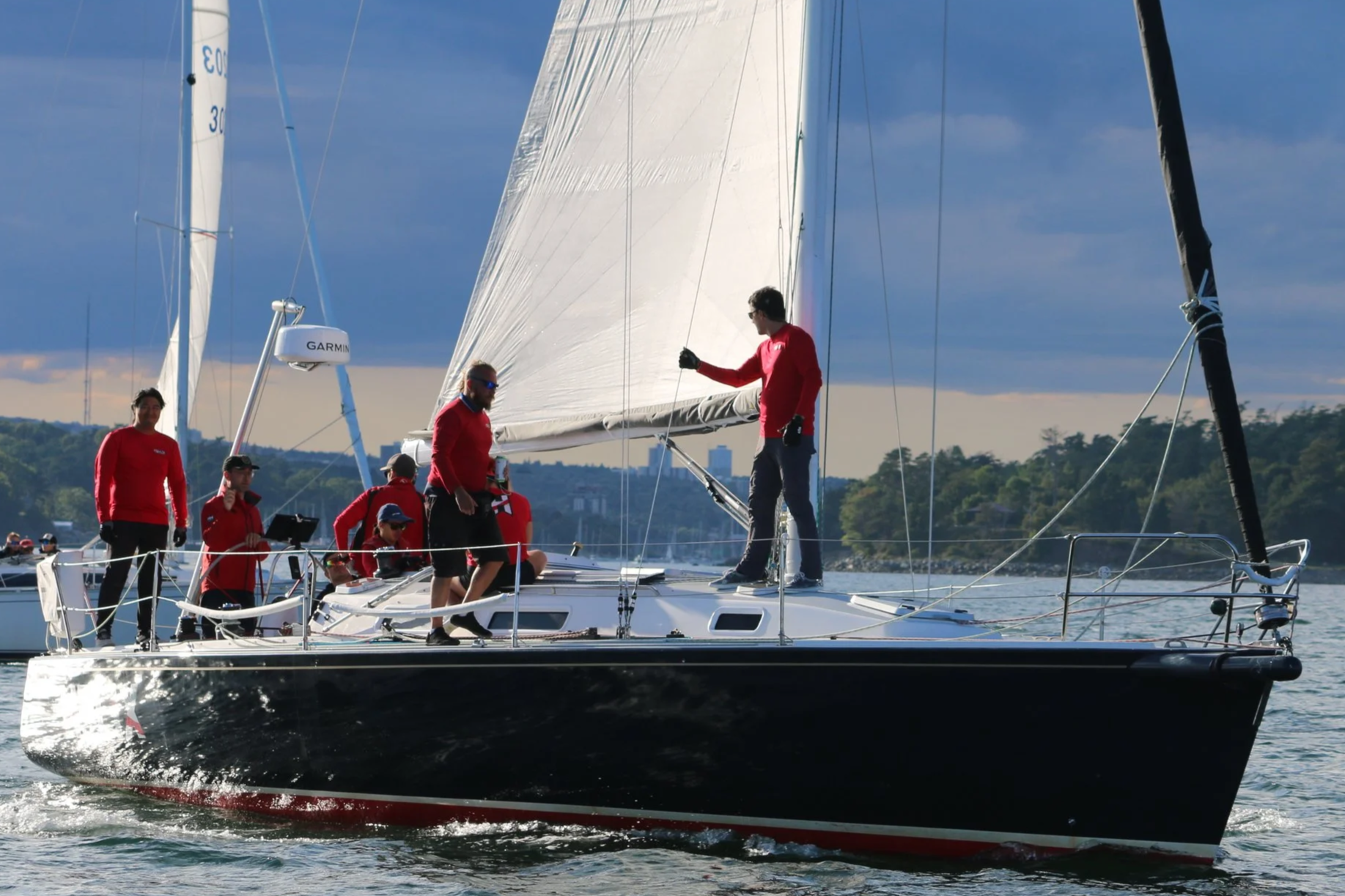
A cradle cover rolled tightly alongside the boom before a race
Depending on your setup and desires, the lazy jacks can be set and never adjusted or maybe you would prefer to ease them a little while sailing and then tightening them again before lowering the main. Some people go so far as to run the lazy jacks forward to the mast and then rolling the cover up so it stows alongside the boom. The cover can happily exist alongside the sail or maybe hanging alongside the boom, it all depends on how things are set up.
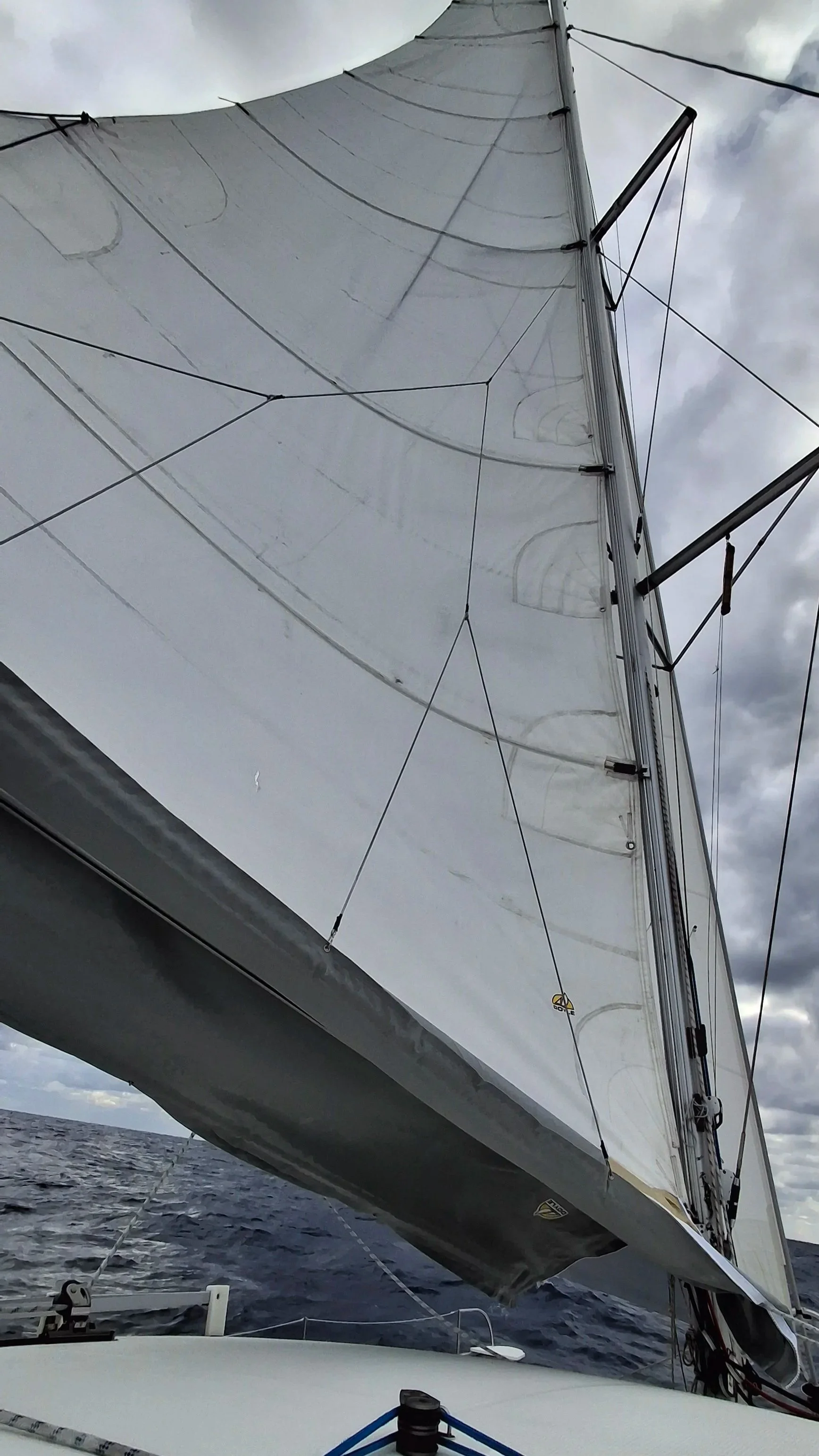
A cover hanging alongside the boom while under full sail
A cradle cover is made from Sunbrella, the same material as dodgers, regular sail covers and much of the UV protection on genoas. As such there is a wide range of colours available and we can match the other canvas on a boat.