
Cross cut vs. radial sails
When it comes to sail construction there are two basic approaches: cross cut and radial. In simple terms, a cross cut design has the panels laid out across the sail whereas a radial design has the panels radiating out from the corners. A cross cut sail is less expensive to build and can give more options when it comes to shaping the sail whereas a radial design can use lighter fabric and give a more stable shape.
The majority of sails out there are cross cut dacron. A cross cut design makes the best use of the properties of dacron and creates less wastage on a roll of cloth. The panels run across the sail, thus the name, perpendicular to the leech and the seams between the panels are curved to give the sail shape.
While it’s certainly possible to build a radial sail out of dacron, it’s not the most effective use of the design. Usually radial sails are built from laminate and the radial nature of the sail means that a lighter material can be used. The radial panels allow for the strains in the sail to run along the strongest part of the cloth, no matter where the panel is in the sail. Thus there are more, smaller panels compared to a cross cut sail resulting in a more complex build and less efficient use of the material. A radial sail will cost more than a cross cut sail but will result in a more stable shape and, usually, a lighter sail.
As with every other aspect of sail making, we will use the desires of the customer to decide on the best construction method. Most of our cruising sails are cross cut dacron while most of our racing sails are radial cut laminates but there are always exceptions. Give us a call to find out what might be the best choice for you.
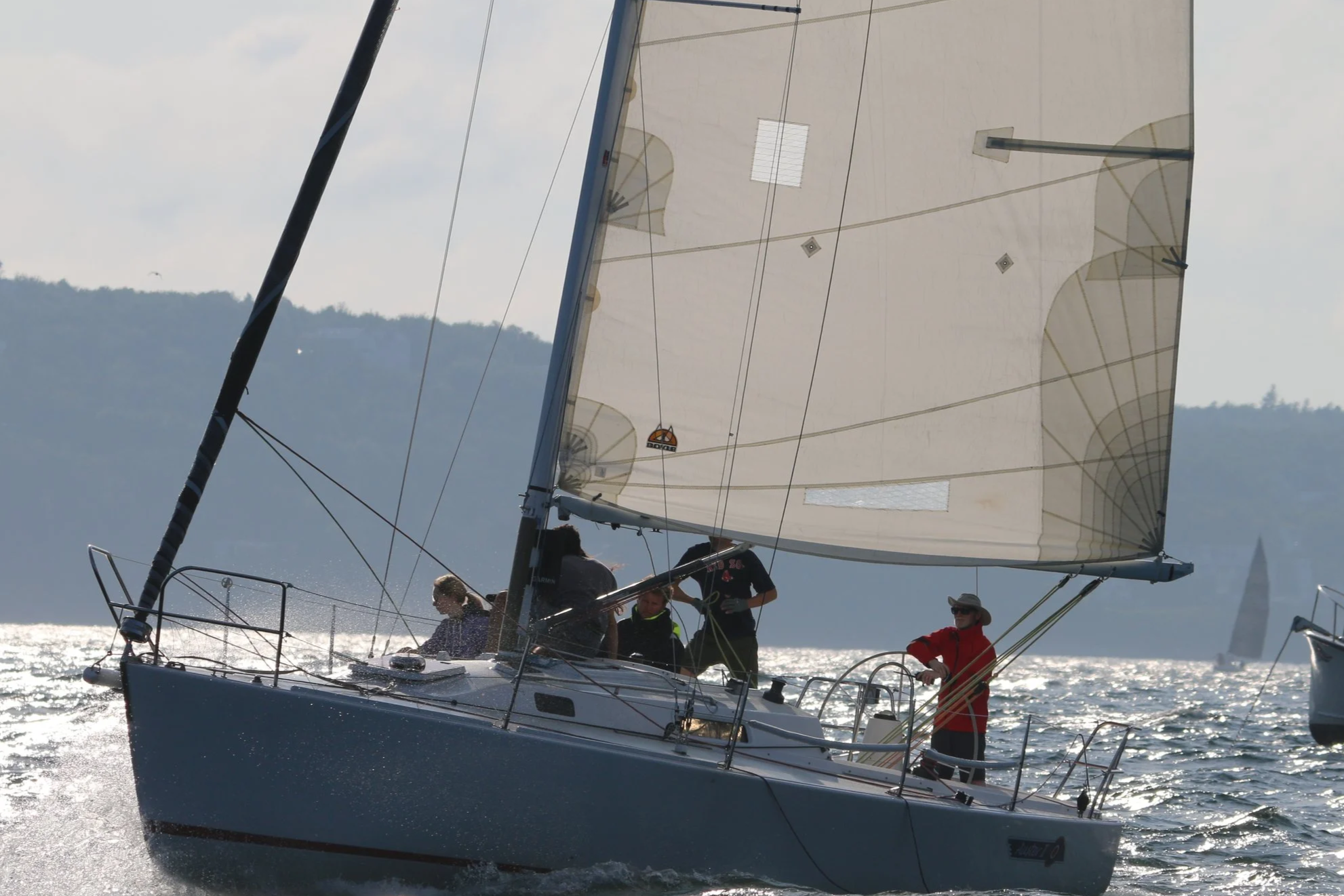
A cross cut dacron mainsail with the panels running perpendicular to the leech clearly showing
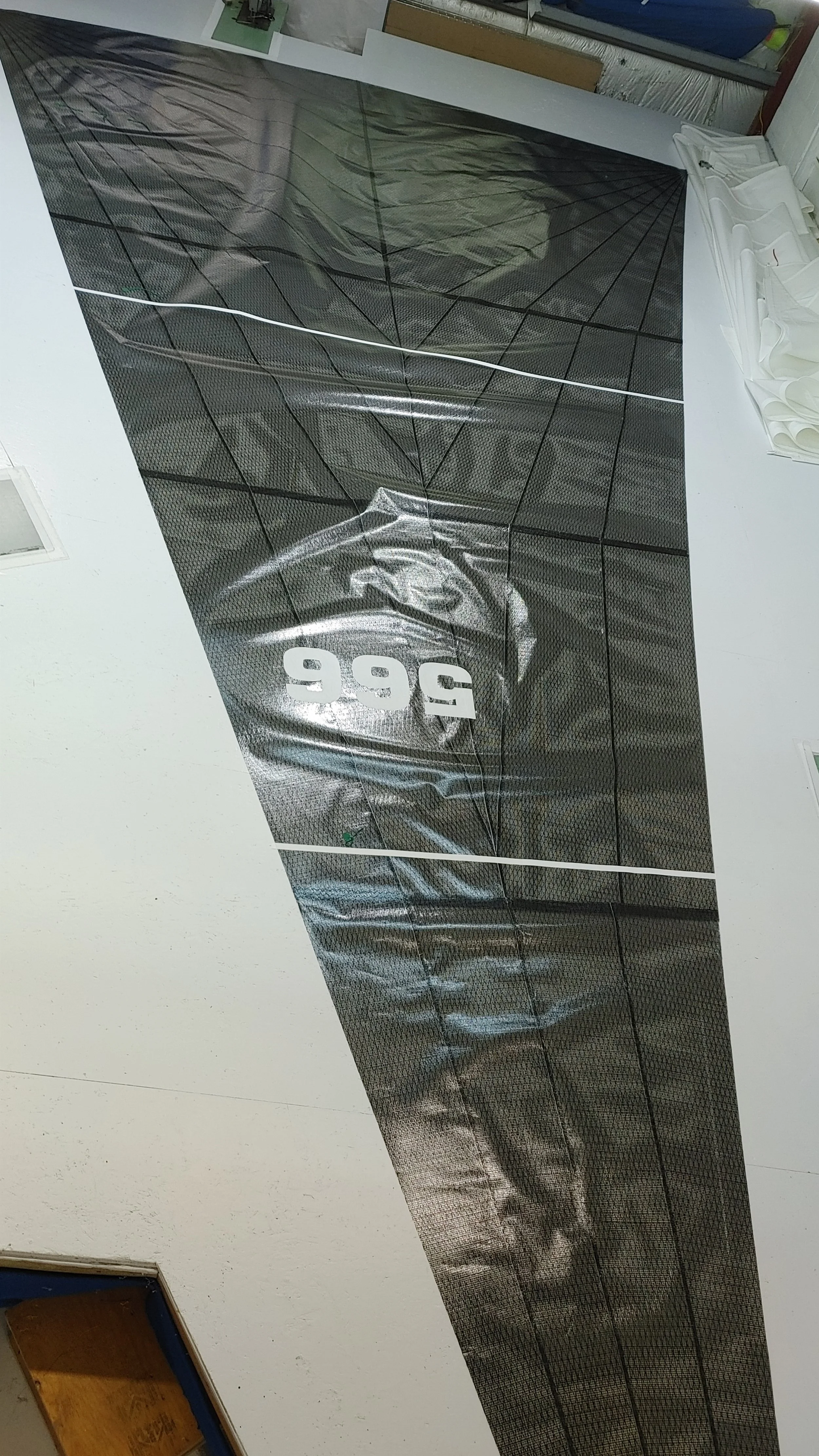
A tri-radial laminate genoa with the panels radiating out from the corners