
Sailmaking “cloth”
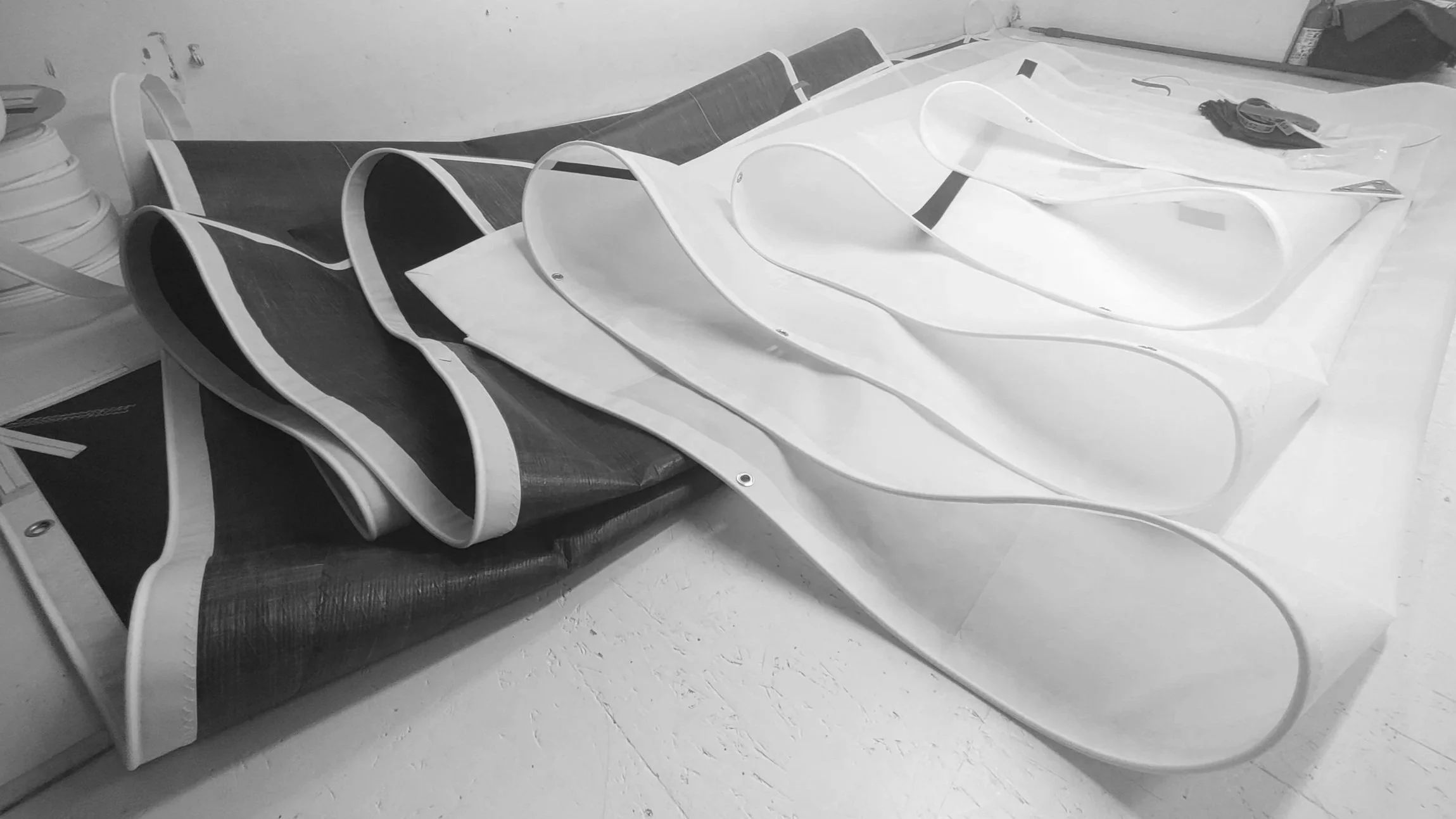
Laminates (left) and dacron (right) are the two most popular types of cloth
When is comes to the materials used to make sails there is a bewildering array. However they can be broken down into 3 main categories (4 including spinnakers); dacron, laminates and the high tech propriety fabrics unique to each franchise (and nylon for spinnakers).
The vast majority of sails out there are made from dacron. This is a woven material and is the result of many, many years of development. Woven materials are, relatively speaking, simple and cheap to make up come with some downsides. The biggest one is that the fibres can move and stretch which causes anything made from woven material to change shape, both temporarily and over time. Sails are designed and built with a specific shape in mind and ensuring that shape doesn’t change has consumed sail makers since the dawn of time. So having a stable material to work with is of highest priority and dacron answers that need.
The process of making dacron, in all it’s variations, is complicated and very technical but the end result is a cloth that’s very stable. We have access to, and use when required, many different types of dacron but our primary consideration is the weight of the cloth. The weight dictates the stiffness and durability of the sail so we consider the size of boat, where it’ll be sailed and the intended use of the boat to decide what weight of cloth to use.
A step up from dacron, when it comes to stability, is laminates. As the name suggests, these types of cloth are made up of layers laminated together, generally mylar for stability, fibres of some sort for strength and maybe a scrim for durability. The amount of laminates available to us is staggering with new ones arriving and older ones being phased out semi-regularly.
While laminates are more stable than dacron and generally give a more refined shape for longer, they are not as durable and require more care and attention to keep them in good shape. Laminates usually appeal more to racers who are more concerned with performance although there are some specific materials aimed at the blue water cruising market. Laminate sails need to be sowed properly and, ideally, used carefully to preserve them. They can be repaired, or course, and adjusted but when they get to the end of their life there’s nothing that can be done to prolong it.
Just as with dacron, we take into account the size of boat, where it’ll be sailing and the intended use to decide on which laminates to recommend. The sky is the limit when it comes to cost so we usually concentrate on the more economical choices that fit our market better.